AI and Human Longevity: The Quest to Double Our Lifespan by 2030
The convergence of artificial intelligence and aging research is opening unprecedented pathways to extend human life expectancy to 150 years—transforming aging from an inevitable process into a manageable condition.
Table of Contents
- The Bold Promise of Longevity Escape Velocity
- The Scientific Foundation: Why 150 Years Is Achievable
- The Technology Convergence Revolutionizing Aging Research
- The Three-Tier Approach to Biological Escape Velocity
- The Economic and Social Implications
- Current Challenges and Realistic Timelines
- The Path Forward: From Science Fiction to Medical Reality
The Bold Promise of Longevity Escape Velocity
Imagine celebrating your 150th birthday while maintaining the vitality and health of someone decades younger. This isn't science fiction anymore—it's the ambitious goal driving today's most innovative researchers at the intersection of artificial intelligence and longevity science.
The concept of "Longevity Escape Velocity" (LEV) represents a theoretical tipping point where medical advances extend the human lifespan faster than we age. For every year we survive, science would add more than a year to our life expectancy. Prominent figures like Dario Amodei, CEO of Anthropic, predict this breakthrough could arrive within this decade, potentially doubling human lifespan from today's average of 75 years to 150 years.
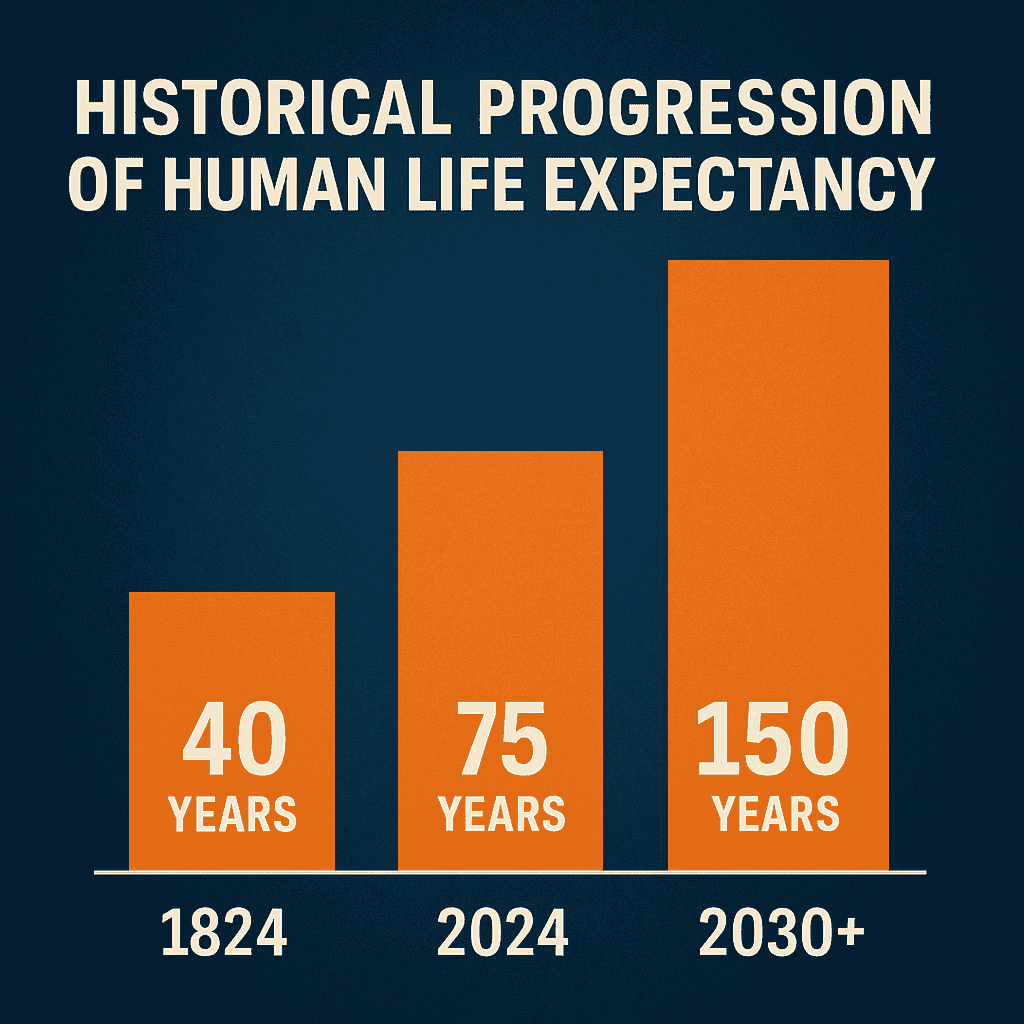
Fascinating Fact: Human life expectancy already doubled during the 20th century, rising from approximately 40 to 75 years—all without the sophisticated AI tools we possess today.
The Scientific Foundation: Why 150 Years Is Achievable
The premise isn't as radical as it might seem. This dramatic increase stemmed largely from improvements in infant mortality rates and basic medical care—achievements made without the sophisticated tools we possess today.
Modern artificial intelligence brings unprecedented capabilities to longevity research through DNA repair acceleration, precision drug discovery, and personalized longevity medicine that tailors interventions to individual genetic profiles.

DNA Repair and Cellular Regeneration
At its core, aging represents the gradual decay of our DNA. AI accelerates the discovery of cellular "reset switches" by analyzing vast genomic datasets to identify precise intervention points.
Precision Drug Discovery
Traditional drug development takes decades and costs billions. AI compresses this timeline dramatically, identifying potential anti-aging compounds in weeks rather than years.
Personalized Longevity Medicine
AI enables the development of "aging clocks"—sophisticated biomarker systems that assess biological age versus chronological age for personalized interventions.
The Technology Convergence Revolutionizing Aging Research
Several technological advances are converging to make extreme life extension possible through AI-guided interventions at the cellular and molecular level.
CRISPR and Gene Editing
AI-guided gene editing technologies like CRISPR can now target specific aging mechanisms. Researchers are exploring "partial reprogramming" techniques that rewind cellular age without causing tumorous growth.
Senescent Cell Elimination
"Zombie cells" that stop dividing but continue producing inflammatory compounds accumulate as we age. AI helps identify the most effective senolytic drugs by predicting optimal combinations.
Mitochondrial Enhancement
AI algorithms analyze mitochondrial function patterns to develop targeted therapies that restore cellular energy production, potentially reversing age-related fatigue and organ dysfunction.
Nanotechnology Integration
Microscopic robots could soon patrol our bloodstreams, performing cellular repairs at the molecular level. AI controls these systems, directing nanobots to specific targets throughout the body.
The Three-Tier Approach to Biological Escape Velocity
Current longevity research operates across three distinct therapeutic categories, each representing different levels of intervention complexity and potential impact.
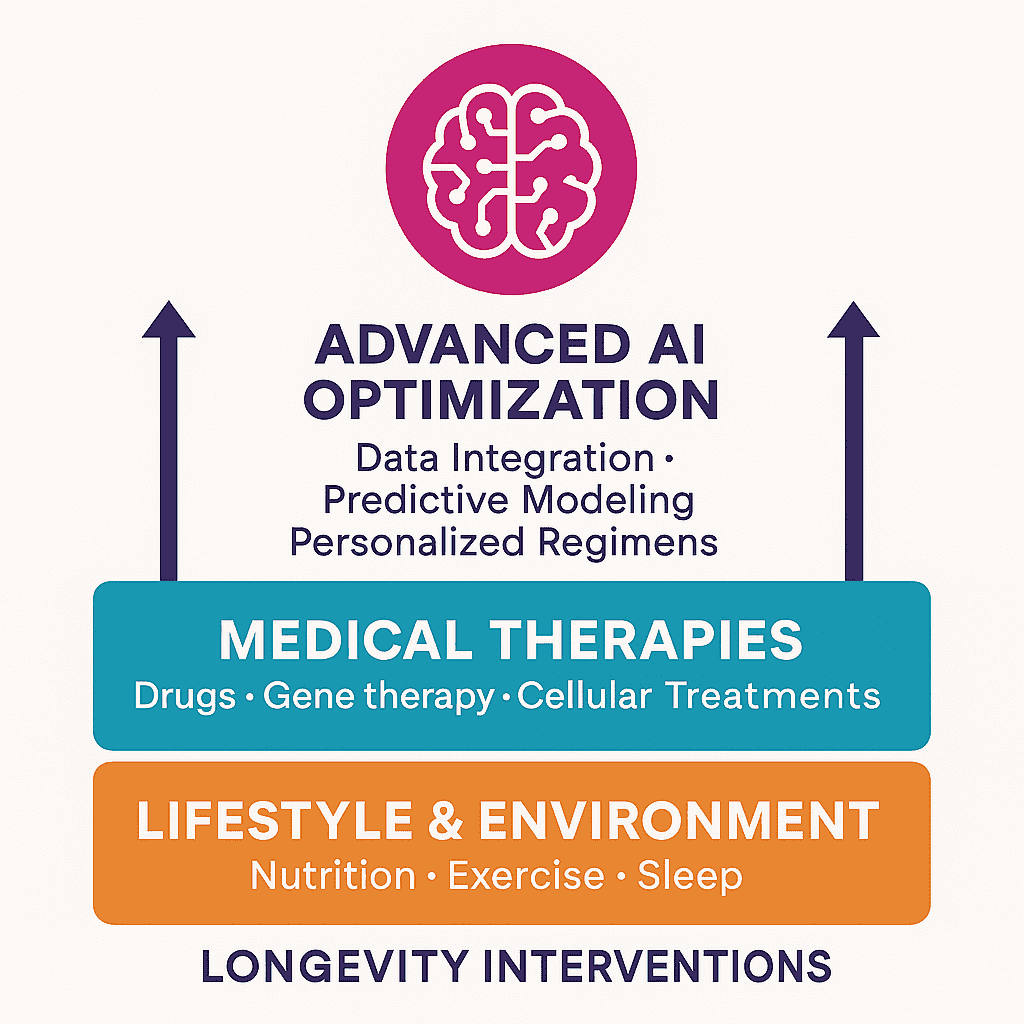
Tier 1: Optimization Therapies
Lifestyle interventions, supplements, and non-invasive treatments. AI personalizes nutrition plans, exercise regimens, and supplement protocols based on individual biomarkers.
Tier 2: Medical Interventions
Advanced medical treatments including hormone replacement, targeted drug therapies, and regenerative medicine procedures optimized by AI for maximum efficacy.
Tier 3: Genetic and Cellular Engineering
Direct genetic modifications, stem cell therapies, and organ replacement technologies representing the most aggressive interventions with highest potential for dramatic life extension.
The Economic and Social Implications
Achieving longevity escape velocity would fundamentally reshape human civilization. Healthcare systems would shift from treating age-related diseases to preventing aging itself. Traditional concepts of retirement, career progression, and intergenerational wealth transfer would require complete reimagining.
The economic implications are staggering. Currently, approximately 100,000 people die daily from age-related causes globally. Each day of delayed longevity escape velocity represents millions of years of potential human productivity and experience lost forever.

Current Challenges and Realistic Timelines
Despite the promise, significant obstacles remain. The complexity of human biology means that extending the maximum lifespan beyond current limits requires addressing multiple aging mechanisms simultaneously. Regulatory frameworks struggle to adapt to rapidly evolving biotechnology, potentially slowing the deployment of life-extending treatments.
Leading Researchers' Predictions for Achieving Longevity Escape Velocity:
- Ray Kurzweil: By 2030 for those in good health with adequate resources
- George Church: Within one to two decades
- Aubrey de Grey: Mid-2030s to early 2040s
The Path Forward: From Science Fiction to Medical Reality
The convergence of AI and longevity research represents humanity's most ambitious undertaking since the space program. Unlike previous medical breakthroughs that addressed specific diseases, this effort targets the fundamental process of aging itself.
Success requires unprecedented collaboration between technology companies, pharmaceutical giants, regulatory bodies, and research institutions. The stakes couldn't be higher—the difference between achieving longevity escape velocity in 2030 versus 2040 represents potentially saving hundreds of millions of lives.
As we stand on the threshold of this biological revolution, the question isn't whether AI will help humans live longer—it's how quickly we can harness these technologies responsibly. The future of human longevity is being written in laboratories today, where artificial intelligence and biological understanding converge to challenge our most fundamental assumptions about the human lifespan.
The Race Against Time Has Begun
For the first time in human history, time itself might not win. The convergence of artificial intelligence and biological understanding is creating unprecedented opportunities to extend human lifespan beyond anything previously imaginable.
References
1. Popular Mechanics - "Can AI Double Human Lifespan?" - Analysis of Dario Amodei's predictions and current longevity research developments (May 2025)
2. Frontiers in Aging Research - "Towards AI-driven longevity research: An overview" - Comprehensive review of artificial intelligence applications in aging research and biomarker development (PMC Article, 2023)
3. TRENDS Research & Advisory - "AI and Longevity: Can Artificial Intelligence Help Humans Live Longer?" - Technical analysis of AI applications in drug discovery, genomic analysis, and predictive healthcare for aging populations (2024)
4. National Institute on Aging - "Harnessing artificial intelligence to explore exceptional longevity" - Federal research initiatives exploring AI/ML solutions for analyzing factors affecting human longevity (2022)
Important Considerations
Health Disclaimer:This article is for informational purposes only and should not be considered medical advice. Consult healthcare professionals before making any decisions regarding longevity treatments or interventions.
Research Note:Longevity research is rapidly evolving. Predictions and timelines mentioned reflect current expert opinions but should be understood as speculative given the complex nature of aging biology and technological development.