Why Printing Money Destroys Purchasing Power: The Hidden Tax on Your Wealth
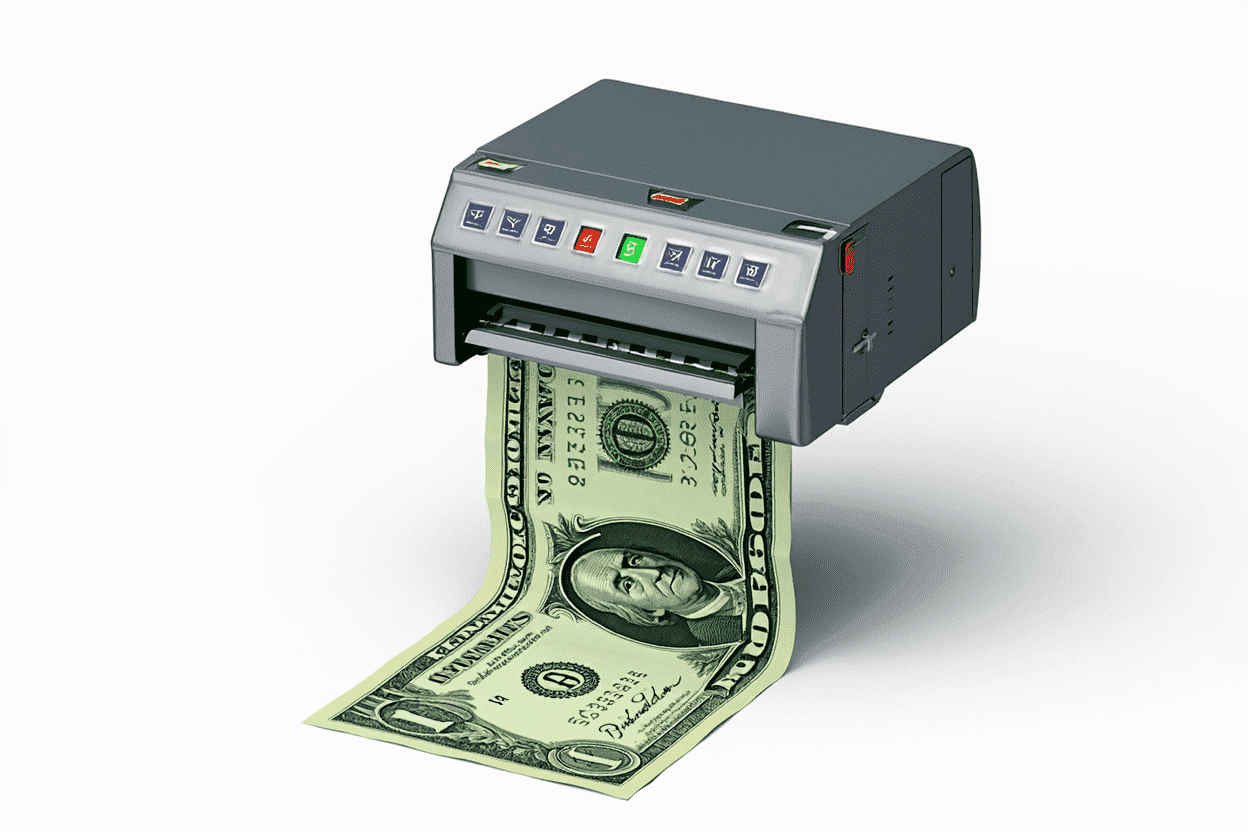
Table of Contents
Money printing might seem like a harmless solution to national debt, slow economies, or political promises. In reality, it's one of the most damaging interventions in any financial system, silently eroding the purchasing power of the people who use that currency every day.
Let's set aside technical jargon and get to the root of the issue: printing money doesn't create wealth — it dilutes it. Understanding this fundamental principle is crucial for protecting your financial future and making informed investment decisions.
The Illusion of More Money
When central banks inject more currency into the economy—whether through stimulus, "quantitative easing," or direct payments—they aren't creating value. They're simply relabeling existing value. Picture this: a pie is still the same size, but now there are more people holding forks.
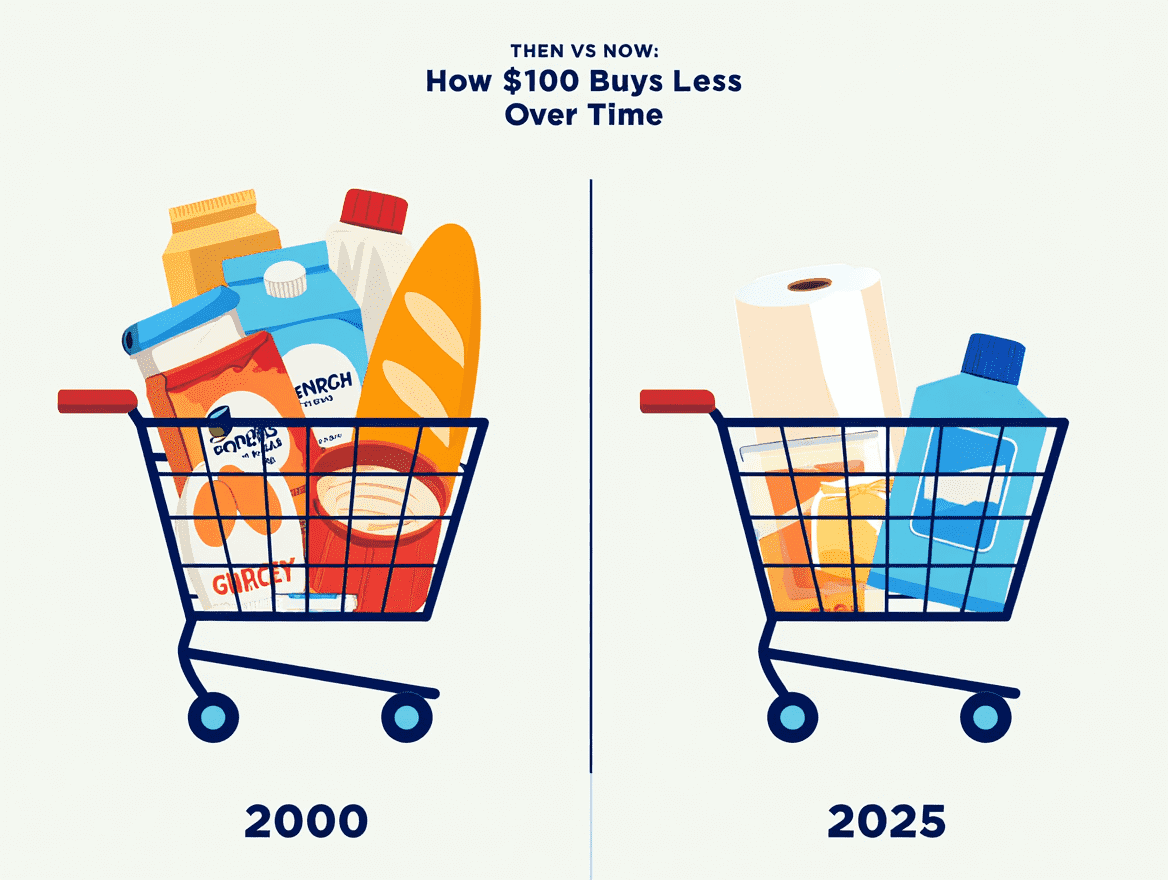
Prices rise not because products became better or more scarce, but because the value of each monetary unit decreases. What used to cost $10 now costs $12, and soon $15—not because the product changed, but because your money did. This is not just inflation. It's purchasing power theft.
Fascinating Fact: In a free economy, value is produced by work, innovation, and voluntary exchange. But when a central bank creates new currency at zero effort, it inserts non-earned money into the system, breaking the link between productivity and reward.
The Cantillon Effect: Who Gets Rich First?
When new money enters the economy, it doesn't reach everyone equally or at the same time. This is known as the Cantillon Effect. The ones who receive the money first—usually banks, corporations, or governments—get to spend it before prices rise.
By the time the money trickles down to workers or small businesses, prices have already inflated. The late receivers are left with devalued currency, making them poorer in real terms while those closest to the money spigot benefit most.
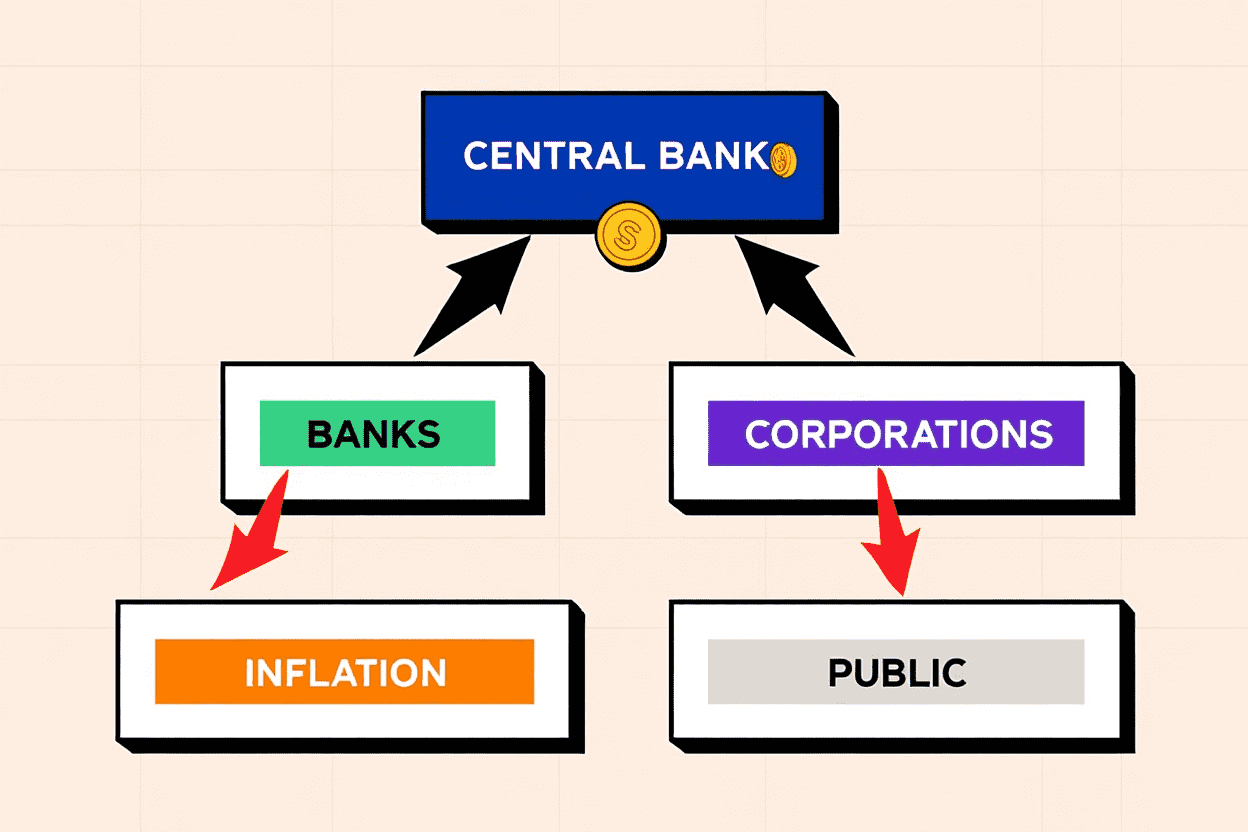
Early Recipients
Banks, corporations, and governments spend new money before prices rise, effectively gaining purchasing power at the expense of everyone else.
Late Recipients
Workers and small businesses receive devalued currency after inflation has already occurred, reducing their real purchasing power.
The Human Cost of Silent Theft
The most tragic aspect of money printing is that its damage isn't always immediate. It's not like a market crash. It creeps. Gradually, your salary buys less. Your savings shrink in power. Rents go up. Groceries increase. The middle class quietly erodes.
Those who work hardest and save the most—the backbone of any economy—are punished. Meanwhile, those closest to the political machine thrive. This silent transfer of wealth is not accidental. It's a feature of fiat systems.

Critical Insight: Governments often treat inflation like a natural disaster, but inflation is always a monetary phenomenon—a result of expanding the money supply beyond what the real economy can support.
The Case for Sound Money
Sound money is money that can't be manipulated by political convenience. Historically, that was gold. Today, it might be something else—Bitcoin, for example, has attracted Austrian economists for its scarcity and decentralized design.
When money can't be printed at will, it forces fiscal discipline. It punishes waste. It rewards value creation. And most importantly, it protects the purchasing power of everyday people—the ones who don't have lobbyists or leverage.
If you earn your living through honest work, you should care deeply about what backs your currency. Because in the long run, what matters is not how many digits are in your bank account but what those digits can actually buy.
The Path to Financial Freedom
The more money is printed, the less each unit means. The result? A slow and invisible erosion of freedom. Because when your money loses value, so does your ability to choose, invest, and live on your own terms. That's why printing money doesn't just harm the economy—it harms liberty.
Hard Assets
Consider assets that maintain value independent of currency manipulation, such as precious metals, real estate, or Bitcoin.
Education
Understanding Austrian economics and monetary policy helps you make informed decisions about protecting your wealth.
Diversification
Spread wealth across multiple asset classes and currencies to reduce exposure to any single monetary system.
References
1. Mises Institute - Austrian Economics Principles - Foundational texts on sound money theory
2. Federal Reserve Economic Data - Historical inflation and money supply statistics
3. Cantillon Effect Research - Academic studies on monetary distribution effects
4. Historical Purchasing Power Data - Bureau of Labor Statistics consumer price index
Important Considerations
Investment Risk:This article is for educational purposes only and should not be considered financial advice. All investments carry risk, and past performance does not guarantee future results.
Economic Complexity:Monetary policy involves complex factors beyond money printing, including global economics, trade, and technological advancement.
Professional Guidance:Consider consulting with qualified financial advisors before making significant investment decisions or changes to your portfolio.